We are looking to hire an experienced heavy-duty mechanic to inspect, service, and maintain our range of heavy-duty fleet including but not limited to drill rigs, heavy duty trucks on site. The mechanic will be responsible for inspecting engines and equipment, carrying out services, conducting repairs, and providing maintenance (both preventative and corrective) to the fleet onsite. The above-mentioned mechanic will be working under the supervision of the Mechanic In charge and Project Manager.
Job Summary
- Type: full-time
- Location: Gaborone
- Category: Engineering
- Closing Date: 2026-08-30
Key Responsibilities
- Maintains equipment to ensure optimum fleet Availability and Reliability
- Performs Condition Monitoring of equipment through daily inspections of wear and tear of parts.
- Performs fault finding and testing of equipment by analyzing equipment deviations from normal specifications, identify possible causes, determine root cause and troubleshoot deviations.
- Carries out planned schedules and non-scheduled installations, repairs and machine overhaul.
- Involved in installations and commissioning of machine systems onsite.
- Provide timeous feedback to the Supervisor on tasks completed to ensure equipment maintenance history is captured and documented correctly by maintenance clerk.
- Work Identification through inspections and populating backlog work through daily inspection to be done as part of corrective maintenance to feed into the short-term maintenance plans as well as long terms plans/shutdowns.
- Adheres to ALL site Safety, Health and Environmental Policies and Procedures in Area Responsibilities.
Requirements
- National Craft Certificate (NCC) – Heavy Plant Mechanic
- A minimum of 5 years working with heavy plant & equipment
- Experience in Mining will be an added advantageous.
- Experience in Epiroc and Sandvik Machines will also be an added advantage.
- Competence in basic hydraulics is a critical requirement. As an absolute minimum, candidate must be able to read and understand basic hydraulic schematic drawings.
- Knowledge on Rig Control System (RCS)
- Knowledge on Can Bus System
How to Apply
Candidates who meet the above requirements should send their applications, including detailed CVs, Certified copies of certificates and names of referees to: Finance and Human Resource Manager Tlou Drilling (Pty) Ltd P O Box 1918 Gaborone Email to: info@tloudrilling.co.bw SUBJECT: JOB APPLICATION – HEAVY DUTY MECHANIC Closing Date: 30 August 2026 NB: Only Shortlisted candidates will be responded to.
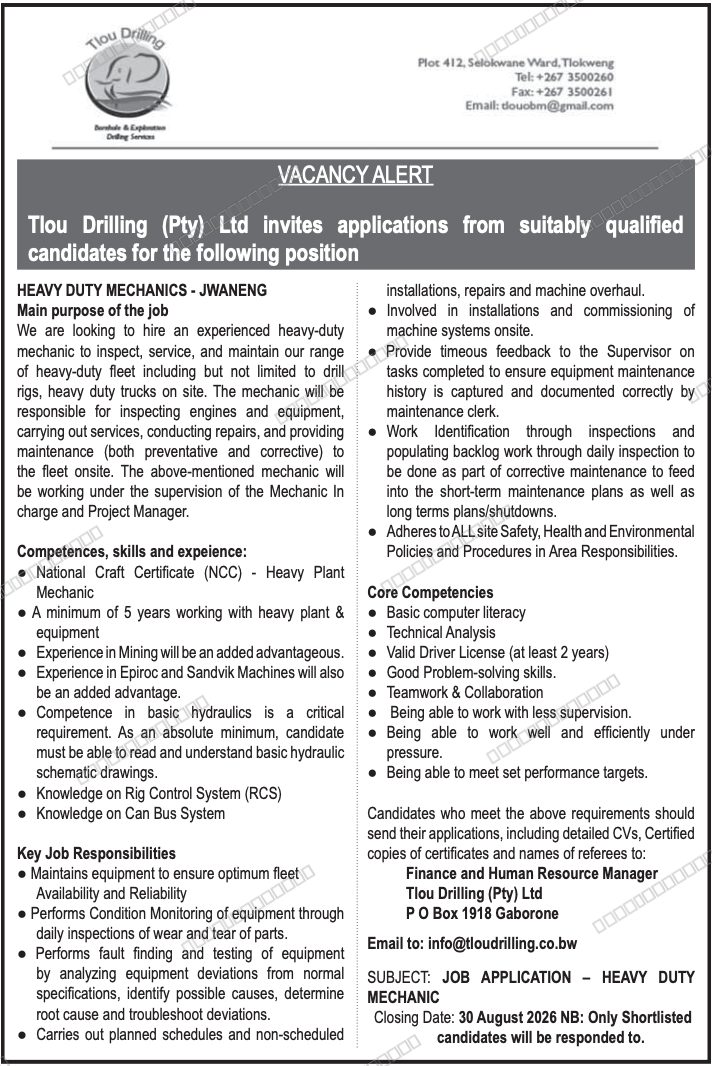
Original Advert
Source document for this listing, published by Jobs Botswana.
Frequently Asked Questions
What qualifications do I need to become a Heavy Duty Mechanic at a drilling company in Botswana?
Most employers expect a National Certificate or Trade Test Level in Diesel/Motor Mechanics from a recognised institution such as Botswana Technical Education Programme (BTEP) institutions. A valid heavy vehicle driving licence and trade test certification are strong advantages. Experience with mining or drilling equipment is often preferred.
What are the typical day-to-day responsibilities of a Heavy Duty Mechanic in this role?
You would service, diagnose and repair heavy machinery such as drill rigs, trucks, loaders and compressors, both in workshops and on site. Duties include engine overhauls, hydraulic and electrical fault-finding, preventive maintenance and keeping accurate job cards. Adherence to safety procedures is essential at all times.
What is the work culture like for mechanics in Botswana's mining and drilling sector?
Work culture emphasises safety compliance, punctuality and teamwork, especially on remote sites like Wananeng where shift work may apply. Employers value discipline, reliability and willingness to work extended hours during breakdowns. Respect for supervisors and clear communication are highly regarded.
What career growth can I expect as a Heavy Duty Mechanic?
You can progress from mechanic to senior mechanic, foreman, workshop supervisor or maintenance planner with experience and further training. Additional certifications in hydraulics, electronics or specific equipment brands improve promotion prospects. Some mechanics also move into training or quality control roles.
What benefits do employers in Botswana typically offer for this type of role?
Common benefits include paid annual leave, sick leave, medical aid contributions and pension fund participation as required by Botswana labour law. Some employers provide accommodation, transport or site allowances for remote locations. Specific packages vary by employer and depend on your experience.
How do I apply and what do employers look for when hiring Heavy Duty Mechanics in Botswana?
Prepare a CV highlighting your trade qualifications, trade test level, licences and hands-on equipment experience, then submit it through the employer's advertised channels. Employers look for proven practical skills, safety awareness and references from previous mechanical work. Be ready for a practical trade assessment or interview.