
Job Summary
- Type: full-time
- Location: Gaborone
- Category: Religious/Church
- Closing Date: 2026-09-22
Key Responsibilities
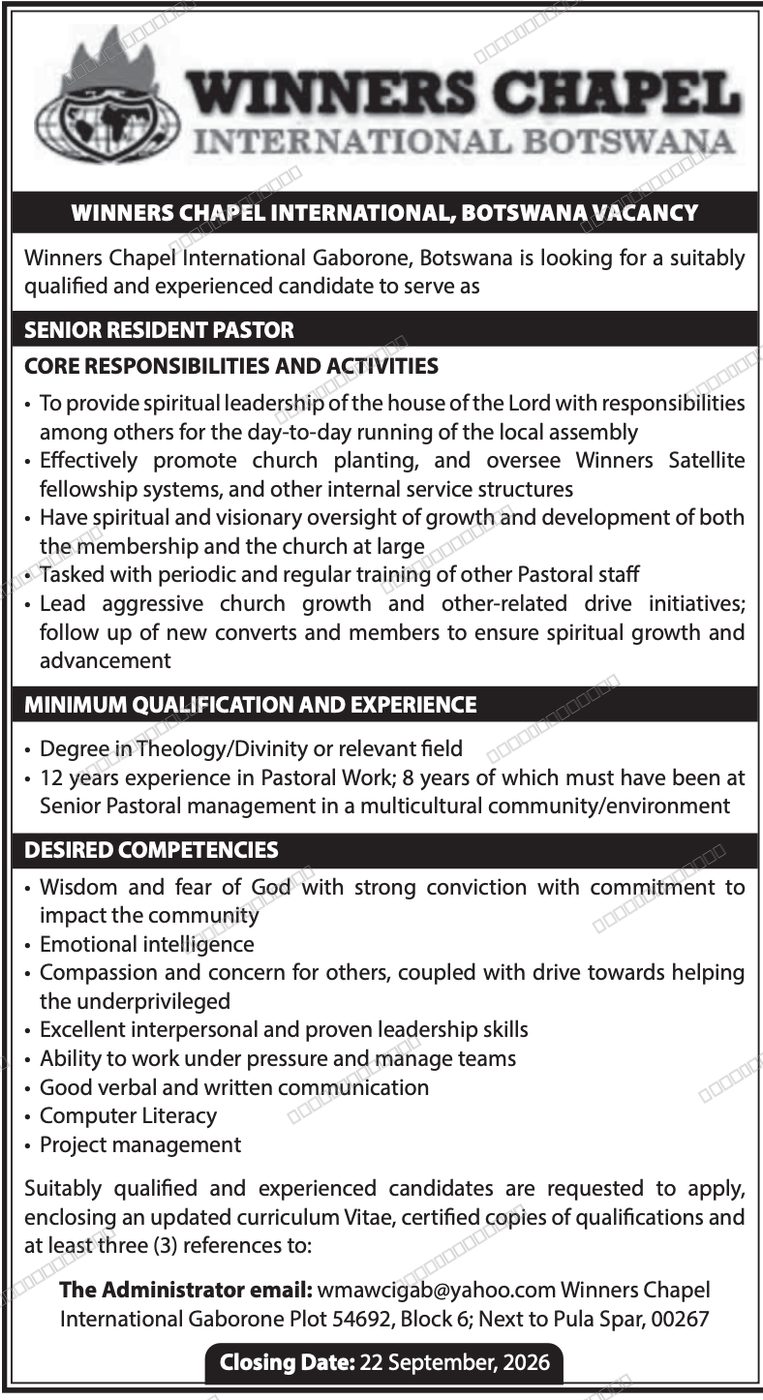
- * To provide spiritual leadership of the house of the Lord with responsibilities among others for the day-to-day running of the local assembly
- * Effectively promote church planting, and oversee Winners Satellite fellowship systems, and other internal service structures
- * Have spiritual and visionary oversight of growth and development of both the membership and the church at large
- * Tasked with periodic and regular training of other Pastoral staff
- * Lead aggressive church growth and other-related drive initiatives; follow up of new converts and members to ensure spiritual growth and advancement
Requirements
- * Degree in Theology/Divinity or relevant field
- * 12 years experience in Pastoral Work; 8 years of which must have been at Senior Pastoral management in a multicultural community/environment
How to Apply
Original Advert
Source document for this listing, published by Jobs Botswana.
Frequently Asked Questions
What qualifications or certifications are typically required for a Senior Resident Pastor role in Botswana?
Applicants usually need a theological degree (e.g., Bachelor of Divinity or equivalent) from an accredited Bible college or university, often with additional pastoral training or ordination. In Botswana, recognition by a registered religious body under the Societies Act is advisable, and fluency in English plus at least one local language (e.g., Setswana) is commonly expected.
What does a typical day look like for a Senior Resident Pastor at Winners Chapel International in Botswana?
Daily responsibilities include leading worship services, preaching, pastoral counselling, overseeing cell group networks, and coordinating outreach programmes across local congregations. Administrative duties—such as reporting to regional leadership, mentoring junior pastors, and liaising with church trustees—are also routine, especially in urban centres like Gaborone or Francistown where church operations are more structured.
How does workplace culture and expectations for pastors differ in Botswana compared to other countries?
Pastors in Botswana are expected to demonstrate strong community engagement, cultural sensitivity to Setswana traditions, and visible involvement in local social issues such as youth mentorship or HIV/AIDS awareness. Respect for hierarchical church governance and close collaboration with lay leadership (e.g., deacons and elders) is standard, reflecting broader societal values of consensus and communal responsibility.
What career progression opportunities exist for a Senior Resident Pastor within this denomination in Botswana?
Growth paths may include appointment as Regional Pastor, National Director of Pastoral Care, or assignment to lead new church plants in underserved areas like Maun or Selebi-Phikwe. Advancement typically depends on proven leadership, denominational loyalty, and completion of internal leadership development programmes offered by Winners Chapel International’s regional office in Southern Africa.
What benefits—such as leave, medical aid, or pension—are commonly provided to Senior Resident Pastors in Botswana-based churches?
Most established churches offer annual leave (21–30 days), basic medical aid coverage through providers like BONFIRE or Medshield, and participation in the Botswana Public Officers Pension Fund (if employed under formal contract). Housing allowance or a furnished parsonage is frequently included, though retirement benefits beyond statutory requirements vary by church capacity and registration status.
How do I apply for this role, and what do employers in Botswana specifically look for in candidates?
Applications are typically submitted via email or in person to the church’s national office in Gaborone, accompanied by a CV, pastoral reference letters, and proof of theological credentials. Employers prioritise candidates with demonstrable local ministry experience, alignment with the church’s doctrinal statement, and evidence of cross-cultural communication skills—especially in multilingual, multi-ethnic congregations common in Botswana’s urban churches.