
Job Summary
- Type: full-time
- Location: Mogoditshane
- Category: Education
- Closing Date: 2026-08-31
Key Responsibilities
- Teaching duties at Mountain View Adventist Academy.
Requirements
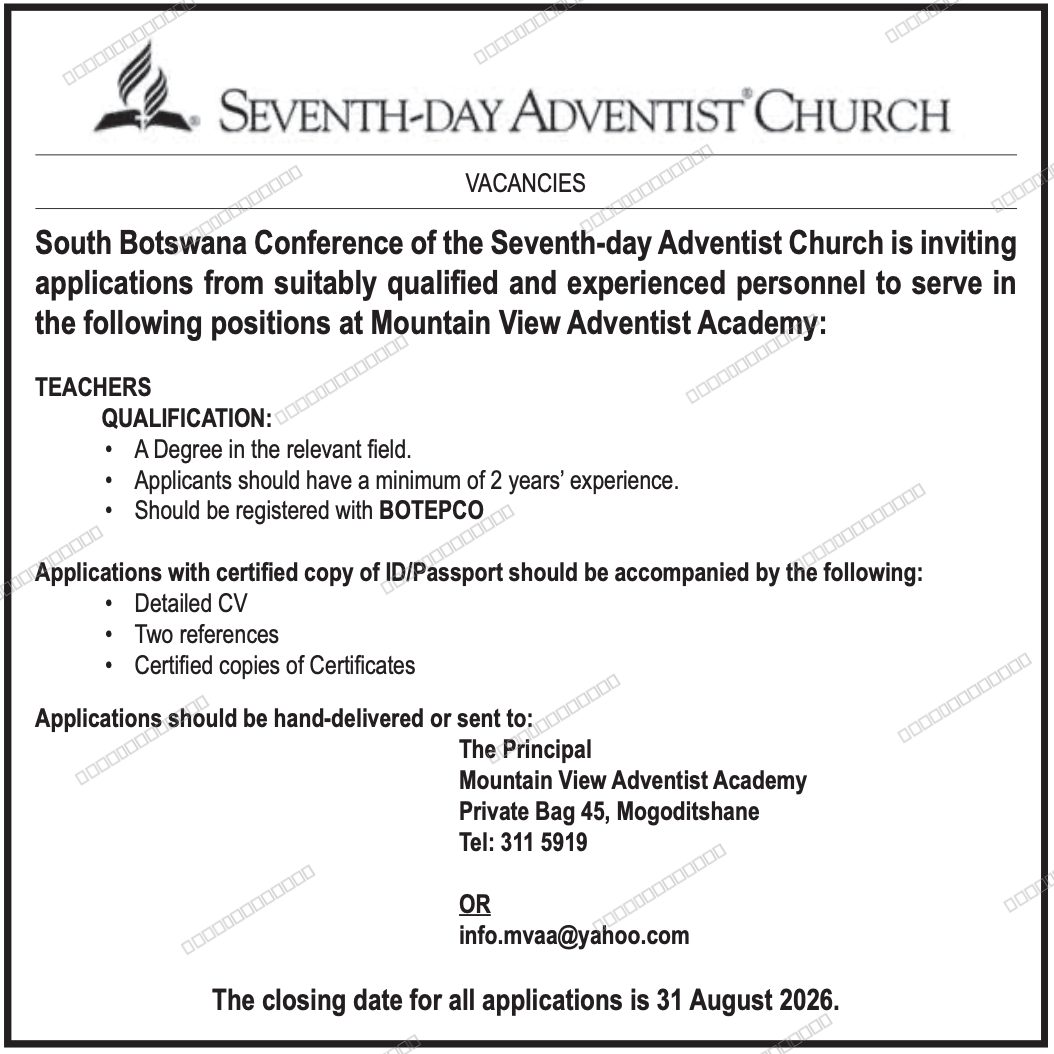
- A Degree in the relevant field.
- Applicants should have a minimum of 2 years’ experience.
- Should be registered with BOTEPCO
How to Apply
Original Advert
Source document for this listing, published by Jobs Botswana.
About the Company
The South Botswana Conference of the Seventh-day Adventist Church is a registered ecclesiastical entity operating throughout Botswana, with administrative offices in Gaborone. It oversees local churches, schools—including Botswana Adventist College in Lobatse—and health initiatives in partnership with the Botswana Ministry of Health. The Conference actively engages in community development, disaster response, and youth programs within Botswana’s districts, including Kgalagadi and Southern regions. It functions as a constituent field of the Southern Africa-Indian Ocean Division of the Seventh-day Adventist Church, but its operations, governance, and service delivery are locally rooted in Botswana.
Serving communities across Botswana through faith, education, and health.
Frequently Asked Questions
What qualifications and certifications are required to teach for the South Botswana Conference of the Seventh-day Adventist Church?
Applicants must hold a Bachelor of Education (B.Ed.) or a relevant undergraduate degree plus a Postgraduate Certificate in Education (PGCE) accredited by the Botswana Qualifications Authority (BQA). Registration with the Teaching Council of Botswana (TCOB) is mandatory, and alignment with Seventh-day Adventist values—including adherence to church doctrines and willingness to participate in religious instruction—is expected.
What does a typical day look like for a teacher in this role?
Teachers deliver curriculum-aligned lessons across core subjects, integrate Christian values and Bible-based content into daily teaching, and participate in morning worship, weekly chapel services, and Sabbath school activities. They also supervise extracurriculars such as Pathfinder clubs and community outreach initiatives common in Adventist schools across Botswana.
How does the local work culture in Botswana influence expectations for teachers in this church-affiliated role?
Respect for authority, communal responsibility, and strong emphasis on moral character are central—teachers are expected to model integrity, punctuality, and pastoral sensitivity in interactions with students, parents, and church leadership. Dress code typically follows modest, professional standards consistent with Adventist ethos and broader Botswanan cultural norms.
What career progression opportunities exist for teachers within the South Botswana Conference?
Experienced teachers may advance to roles such as head of department, deputy principal, or principal—often after completing leadership training offered through the Adventist education system or local institutions like BIUST or UB. Long-serving educators may also be appointed to denominational roles like Curriculum Coordinator or Teacher Trainer for the Conference’s network of schools.
What benefits (leave, medical aid, pension) are typically offered to teachers in this position?
Teachers receive statutory leave entitlements under Botswana’s Employment Act—including 24 days annual leave, sick leave, and maternity/paternity leave—as well as access to the Botswana National Pension Scheme (BNPS). Many Adventist schools supplement this with church-sponsored medical aid schemes and housing allowances, though specifics vary by school and funding level.
How do I apply, and what do hiring managers in Botswana specifically look for in candidates?
Applications are submitted directly to the South Botswana Conference Education Department via email or in person, usually accompanied by certified academic documents, TCOB registration proof, and pastoral/character references from an Adventist pastor. Hiring panels prioritise evidence of classroom experience in Botswana or similar contexts, commitment to faith-based education, and demonstrated ability to engage learners in multilingual (English and Setswana) settings.