
A reputable company specializing in mechanical and medical gas installations is seeking a qualified and experienced Medical Gases Specialist to join our team.
Job Summary
- Type: full-time
- Location: Gaborone
- Category: Engineering
- Closing Date: 2026-09-14
Key Responsibilities
- Work on medical and specialized gas installations
- Ensure compliance with relevant codes, standards and regulations
- Supervise and manage installation teams
- Provide technical support and troubleshooting
- Collaborate with other departments to ensure project success
Requirements
- Relevant Diploma or higher
- 10+ years experience in medical and specialized gases, commercial heating, ventilation and air-conditioning systems
- Must have supervisory experience
- Knowledge in duct erection
- In-depth knowledge of relevant codes, standards and regulations
- Strong technical, problem-solving and communication skills
- Ability to work independently and as part of a team
How to Apply
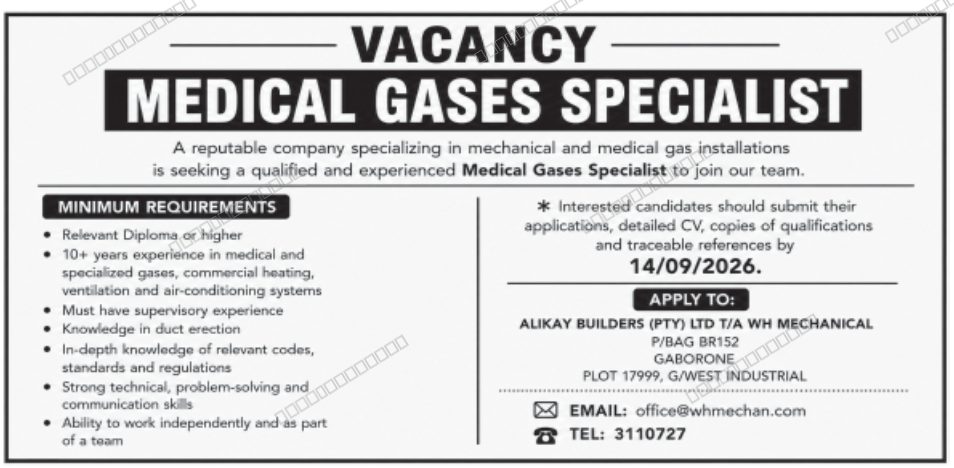
Interested candidates should submit their applications, detailed CV, copies of qualifications and traceable references by 14/09/2026. APPLY TO: ALIKAY BUILDERS (PTY) LTD T/A WH MECHANICAL P/BAG BR152 GABORONE PLOT 17999, G/WEST INDUSTRIAL. EMAIL: office@whmechan.com. TEL: 3110727
Original Advert
Source document for this listing, published by Jobs Botswana.
Frequently Asked Questions
What qualifications or certifications are typically required for a Medical Gases Specialist role in Botswana?
Usually a diploma or degree in mechanical engineering, biomedical engineering, or a related technical field is expected, along with specific training in medical gas systems installation and maintenance. Certifications such as the Botswana Qualifications Authority (BQA) accredited medical gas practitioner course or equivalent international credentials (e.g., NFPA 99 training) are often preferred. Employers also value practical experience with pipeline systems, pressure testing, and compliance with local health and safety regulations.
What are the common day-to-day responsibilities of a Medical Gases Specialist working on engineering projects in Botswana?
The role involves designing, installing, testing, and maintaining medical gas distribution systems (oxygen, nitrous oxide, medical air) in healthcare facilities, ensuring they meet national standards. Daily tasks include reading schematics, conducting pressure and leak tests, coordinating with contractors and hospital staff, and documenting compliance reports. You may also provide training to end‑users and respond to service calls for system faults.
How does the local work culture and expectations in Botswana influence this engineering role?
In Botswana, engineering teams emphasize collaboration, respect for hierarchy, and adherence to both national standards and project timelines, so clear communication and punctuality are highly valued. Employers expect specialists to be proactive in safety compliance and to adapt to resource constraints that may arise on construction sites. Demonstrating cultural sensitivity and a willingness to mentor local technicians can enhance integration and career prospects.
What realistic career progression or growth paths can a Medical Gases Specialist expect in Botswana?
Starting as a specialist, you can advance to senior technician, team lead, or project supervisor roles overseeing larger medical gas installations. With additional qualifications and experience, opportunities exist to move into consultancy, safety auditing, or management positions within engineering firms or healthcare infrastructure departments. Continuous professional development through BQA‑accredited courses or international certifications supports upward mobility.
What typical benefits and employment conditions should a job seeker anticipate for this role in Botswana?
Employers in Botswana commonly provide medical aid contributions, pension or provident fund schemes, and paid leave in line with the Employment Act (including annual, sick, and maternity/paternity leave). Some firms also offer transport allowances, professional development support, and performance‑based bonuses. It is advisable to review the specific contract details during the offer stage to confirm the exact benefits package.
How should a candidate apply and what do Botswana employers look for in applicants for this role?
Applications are usually submitted via online job portals, company websites, or recruitment agencies, accompanied by a concise CV and cover letter highlighting relevant qualifications, certifications, and hands‑on experience with medical gas systems. Employers in Botswana prioritize clear evidence of technical competence, safety awareness, and the ability to work effectively in multidisciplinary teams. Preparing for interviews by reviewing local regulations (e.g., Botswana Occupational Health and Safety Act) and demonstrating problem‑solving scenarios can improve your chances.